




TrustFactory M2M PKI: Why OCSP & CRL Performance Matters
“Revocation is where ‘secure on paper’ goes to die.”
The Short Version
Understanding the two pillars of certificate revocation in a high-density M2M environment.
CRL (Certificate Revocation List)
A periodic broadcast of “bad certificates.” Great for offline or legacy systems, but poses significant bandwidth challenges for low-power IoT devices as the list grows.
OCSP (Online Certificate Status Protocol)
A surgical, real-time “is this specific cert good right now?” request. Essential for high-stakes 5G and AI agent transactions where freshness is everything.
The Critical Risks of Weak Revocation Infrastructure
When revocation fails, the entire trust chain collapses. In M2M ecosystems, the scale of failure is exponential.
Infrastructure Outages
If OCSP responders fail, devices default to “Fail-Closed” (global bricking) or “Fail-Open” (catastrophic security breach).
Undetected Compromise
Slow CRL propagation leaves a “vulnerability window” where compromised keys remain valid for hours or days.
From Industrial IoT and private 5G to Agentic AI, instant certificate revocation at the edge enables secure, low-latency operations for mission-critical systems.
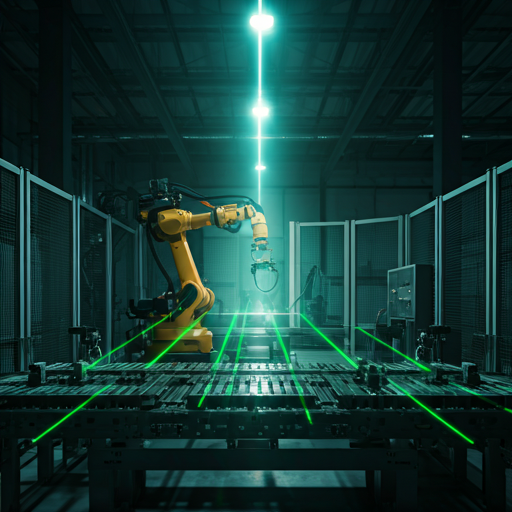
A 5-second delay in revocation checking during a factory reset can stall an entire assembly line for minutes, costing thousands per hour.
Ultra-low latency demands (<1ms) mean revocation must be available at the Edge, not just a central cloud responder.
Autonomous agents making high-speed financial or operational decisions require instant cryptographic certainty to move assets.
What Defines High-Performance Revocation?
Distribution Strategy
Status Refresh
The TrustFactory Advantage
Standard PKI is for humans. TrustFactory is built for the scale and speed of machines.
Infrastructure Outages
If OCSP responders fail, devices default to “Fail-Closed” (global bricking) or “Fail-Open” (catastrophic security breach).
Linear Scalability
Handle millions of OCSP queries per second without breaking a sweat or slowing down.
FIPS 140-2 L3
Hardware-backed responders ensuring the integrity of every revocation status signature.
Deterministic Performance
Guaranteed response times under SLA, essential for automated machine decision-making.
Ready to secure your M2M fleet?
Download our technical whitepaper on High-Density PKI Architectures.